First, notice what the guess tells you
When a child looks at a picture and says “pony” for “horse,” they are doing something sensible: using meaning and context to predict what belongs in the sentence. The guess shows that they are engaged with the story.
The next step is not to stop them from using pictures. It is to help them check that useful prediction against the word on the page.
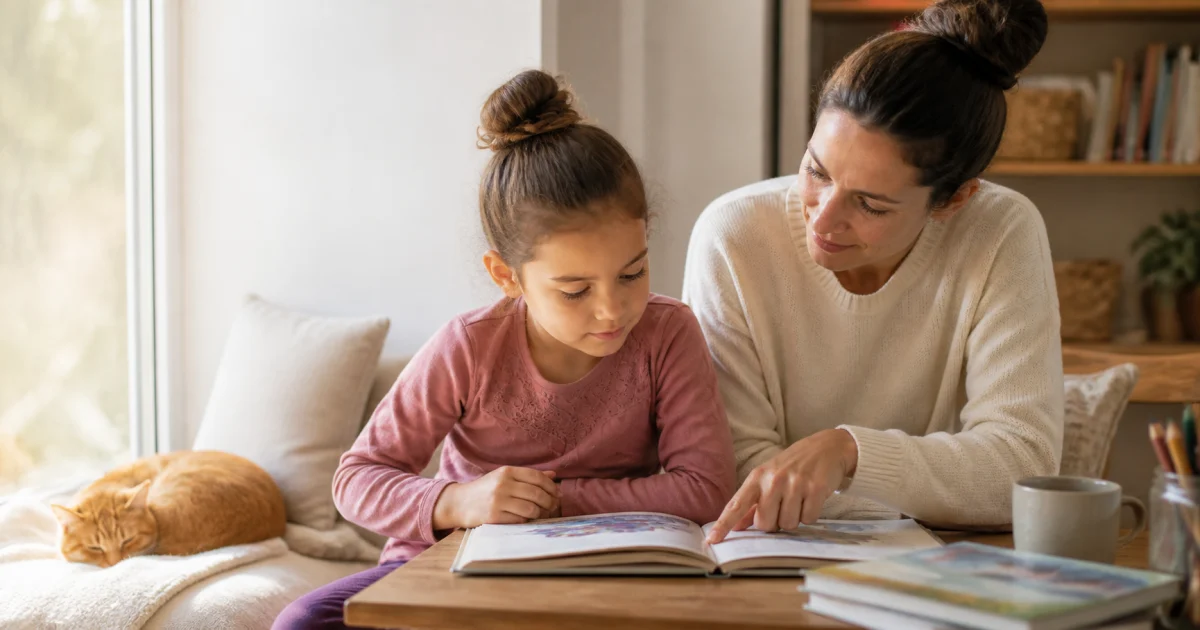
Try: pause, point, prompt, return
Pause for a moment instead of supplying the answer immediately. Point to the word so attention moves from the illustration to the print. Prompt with something specific, such as “What sound does this word start with?” or “Do those letters match pony?” Then return to the sentence and read it again once the word is solved.
This sequence keeps the correction brief. The story remains the reason for reading, while the letters become the evidence that confirms the guess.
Use the smallest helpful prompt
Start with less help than you think the child needs. You might reveal the first sound, cover the ending and read the first part together, or ask them to look for a familiar word inside the longer one.
If the word is still out of reach, simply tell them. Reading practice should contain productive effort, not a test of endurance. You can name the word, reread the sentence together, and keep moving.
Look for patterns, not isolated mistakes
An occasional picture-based guess is normal. If it happens repeatedly, notice whether the child is looking at the first letter, tracking all the way through the word, and checking whether the result makes sense in the sentence.
A short note about the pattern is more useful than correcting every slip in the moment. It can guide which sounds or word parts to practice later, away from the emotional pressure of finishing the page.
Protect the desire to read
Accuracy matters, but so does the willingness to try another sentence tomorrow. Keep your voice neutral, praise the checking rather than speed, and let a successful correction belong to the child.
Taleglow Reading is designed around short stories, graduated levels, and optional word help so a child can get support, return to the sentence, and stay inside the story.